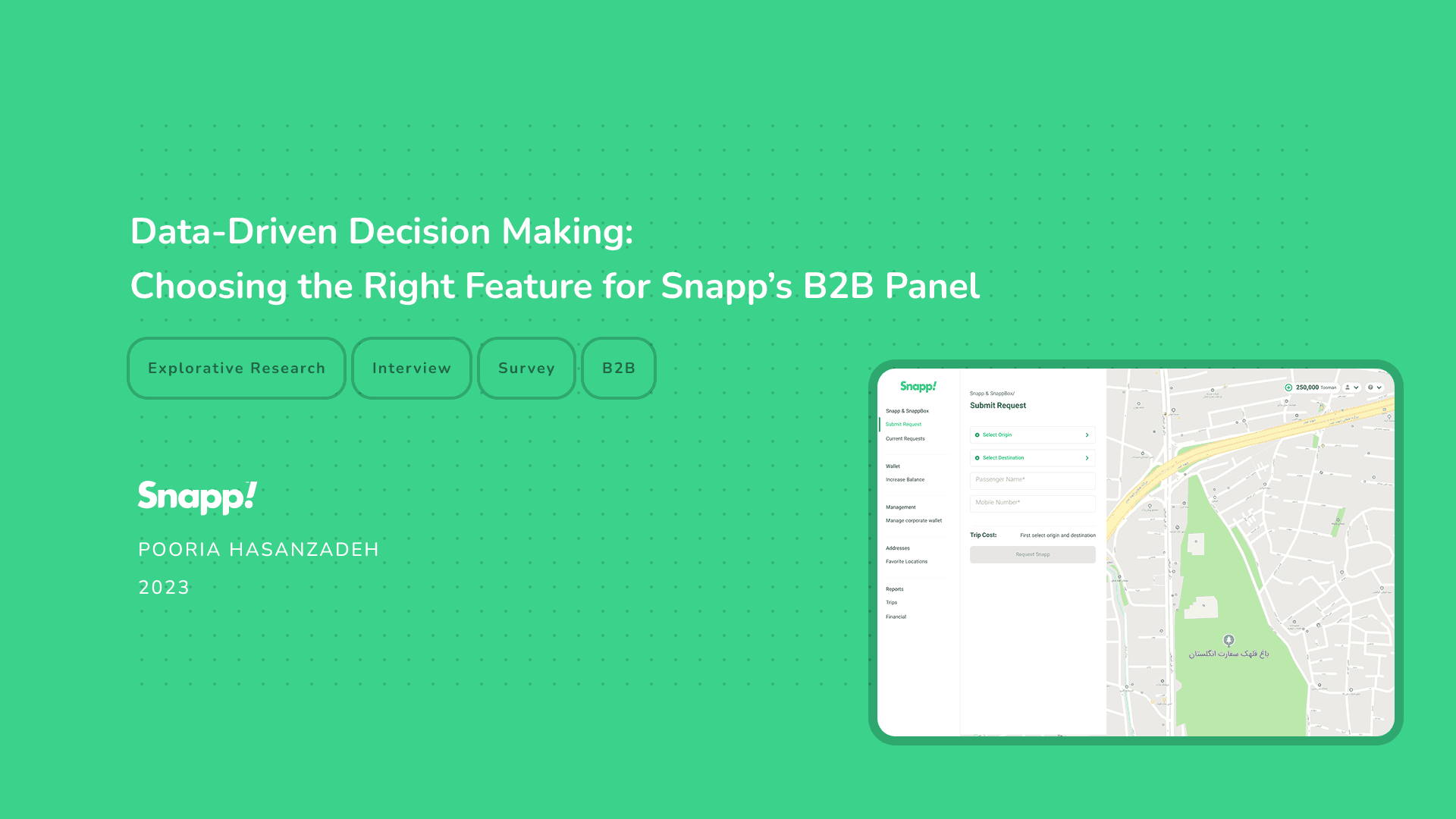
Figure 1: The old design of corporate panel
Snapp Corporate:
Snapp is the largest ride-hailing service in Iran with both B2B & B2C sides. The B2B corporate ride-booking panel is used by small to big companies in Iran, with 5K daily rides.
Companies use Snapp's panel to book rides for their employees. Also, this B2B service lets employees take rides on their own and pay the fee through their corporate panel.
Problem:
In B2B services, a lot of features come from commercial and marketing teams as they sell the panel to other companies and talk directly with customers.
Now, the product team received 2 new feature requests from the commercial team, and they believed these features are crucial to B2B users:
Multi-Destination Trips: Multiple stops in one booking.
Extended Ride Reservations: Ability to book a driver for several hours/days.
But the problem is the product team is not sure about this demand. Their resources are limited, and creating features is costly, so they need to get enough confidence before making a decision about these requests.
Goals:
Research Questions:
What needs do they have that we haven't covered in our services?
How do they solve their needs at the moment?
Which solution brings higher business value?
For the interviews, we had some limitations:
1- Companies were distributed across many cities, and it was difficult to invite those people to our office.
2- On the other hand, visiting many companies takes many days,
3- we had time and budget limitations.
So, we decided to increase the diversity of users' feedback and run our interviews remotely.
For sampling, to get the most findings from this research, we used a simple random sampling method on active users to hear all their needs.
And to manage our time, we asked the call center team to talk to them and invite them for an interview. Then, we ran our interviews via Google Meet.


What did we learn?
It seems we have three types of needs in these companies that depend on the company type.
Most of the companies we talked to have a sales team that needs to visit different places each day, and the waiting time at each location is less than 20 mins.
Right now, they have to send a separate request for each destination per day, which takes more time and money depending on whether they take rides via panel operators or hail them themselves on the street.
On the other hand, there are manager-level rides. As we found, managers have meetings in different locations. The total time of their meetings is not clear, and their meetings are not always pre-scheduled, but generally, they need to get to the destination quickly and can't wait for a driver (the driver should always be ready).
Their solution for these types of rides (inter-city/inner-city) is using a dedicated driver.
An important note is that the car model, driver style and behavior, and always being ready to go are key factors for them. This means any solution needs to meet these criteria, and we can't assign their rides to our drivers just because they are top-rated drivers.
The third group consists of general employees. These people are not top managers who are always in a hurry, and not sales teams who need to go to multiple destinations per day.
They have similarities with the previous group (managers) regarding meetings, but some differences are:
They are not always in a hurry, their meetings are mostly with employees of other companies (not managers), and their total meetings are fewer than managers'.
What should we do next?
Based on our findings, it seems both features those commercial teams offered can work for at least one of these segments. It's important to mention that this doesn't mean that these users will use these features, but as they are aligned with user needs, we can expect to see a percentage of users use them.
To make decisions about which needs to pick, we need one more thing: to know what needs are most common for companies. To do this, we need to run a survey.
To quantify and validate our findings from the interview phase, I decided to run a survey.
To get the best result, we used the same sampling criteria that we used in the interview phase but with a bigger sample size.
Our questions were separated into 2 main categories with open and closed questions:
Understanding their ride type, user type, and frequency of rides.
Their feedback regarding their problems and how they solve them.
At the end, by cleaning the data, we analyzed 368 participants' answers to get a 95% confidence level.
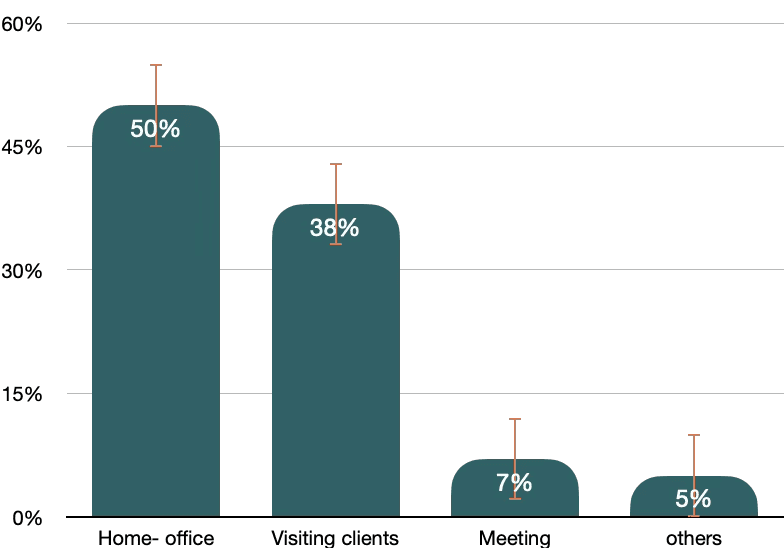
Figure 2: Type of rides.
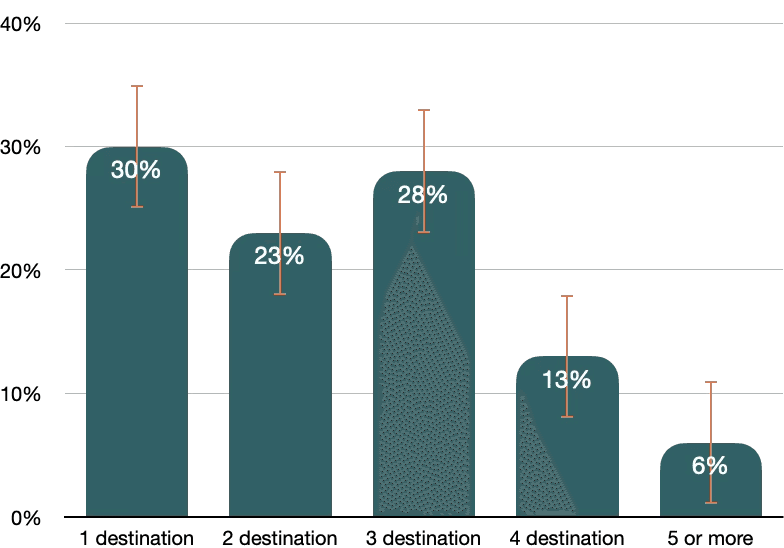
Figure 3 : Destinations per ride
What was the result?
50% of all company rides are for taking rides to the office and home. During working hours, most rides (38% of all) come from commercial marketing teams that have to go to visit their clients.
Destinations per ride are different but mostly are 3 or fewer.
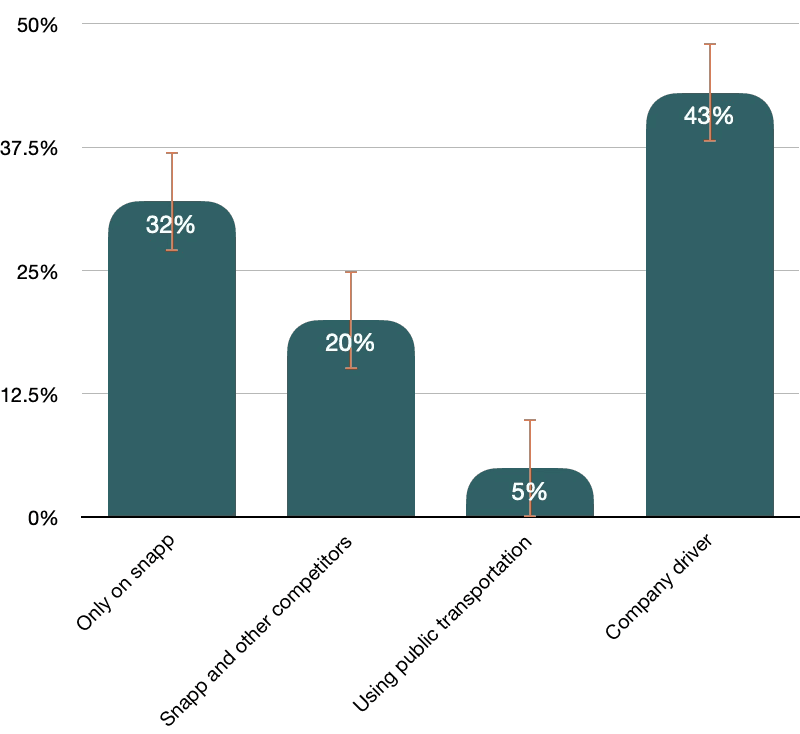
20% of marketing rides can churn right now due to submitting rides on Snapp and other competitors at the same time to find a rider ASAP.
Based on both researches, it seems most company rides come from commercial and marketing departments which mostly want to visit their clients in their cities. 20% of them can churn due to trying to find the fastest possible rides by submitting a request on competitors at the same time.
So, if we focus on this segment instead of the other two groups and allow them to take rides with up to 3 destinations, we have a chance to achieve 2 goals:
Taking more money by multi-destination rides in general.
Reducing churn rate by up to 20%.

Impact:
Our findings led to picking the multi-destination feature and reduced the risk of creating something not useful for users.
After development, we conducted further research to make sure about the usability of this feature.
At the end, the new feature was released, and the result was a +6% increase in monthly revenue following the launch.
Final Design
Figure 5:
Old design without second destination btn.
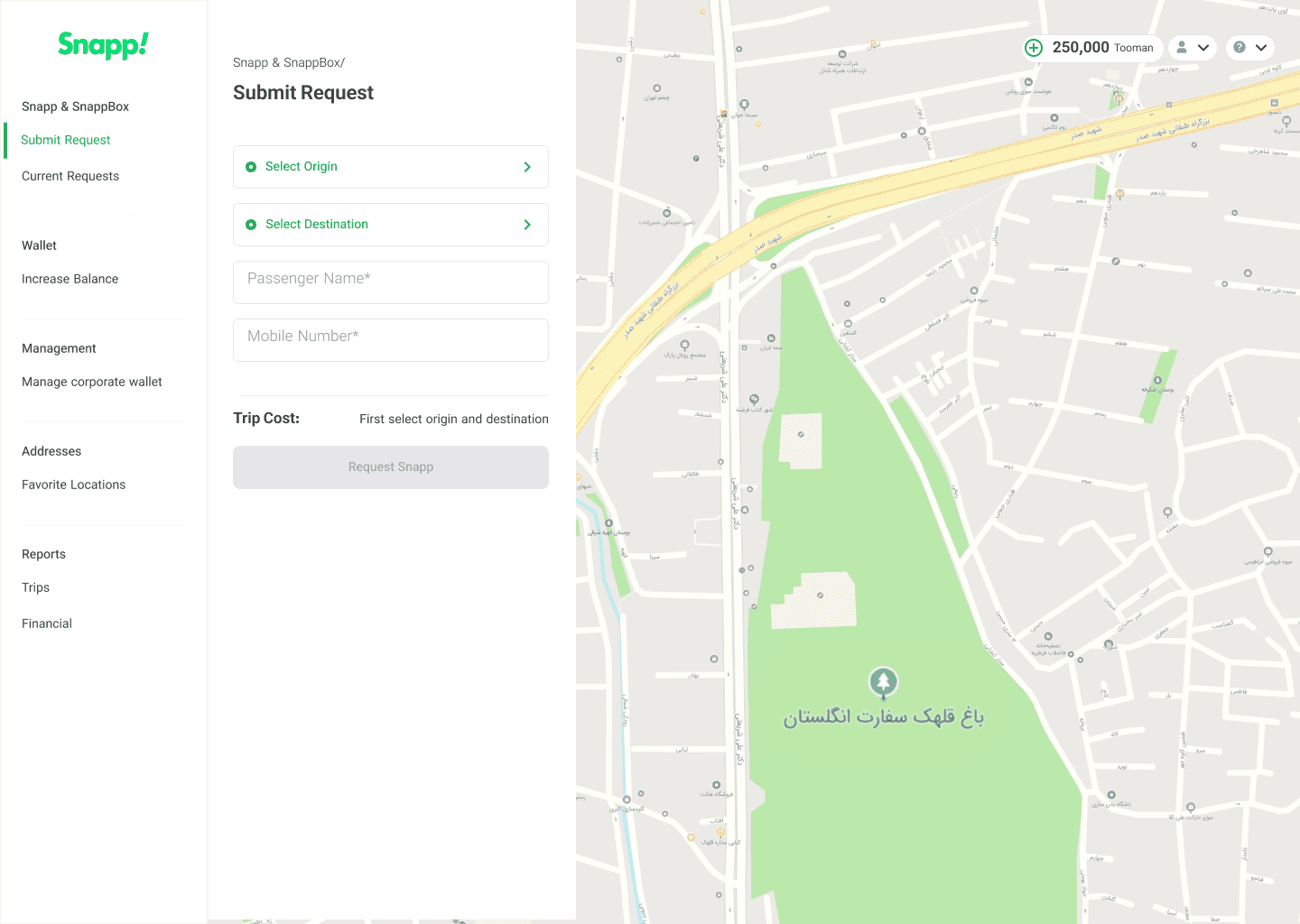
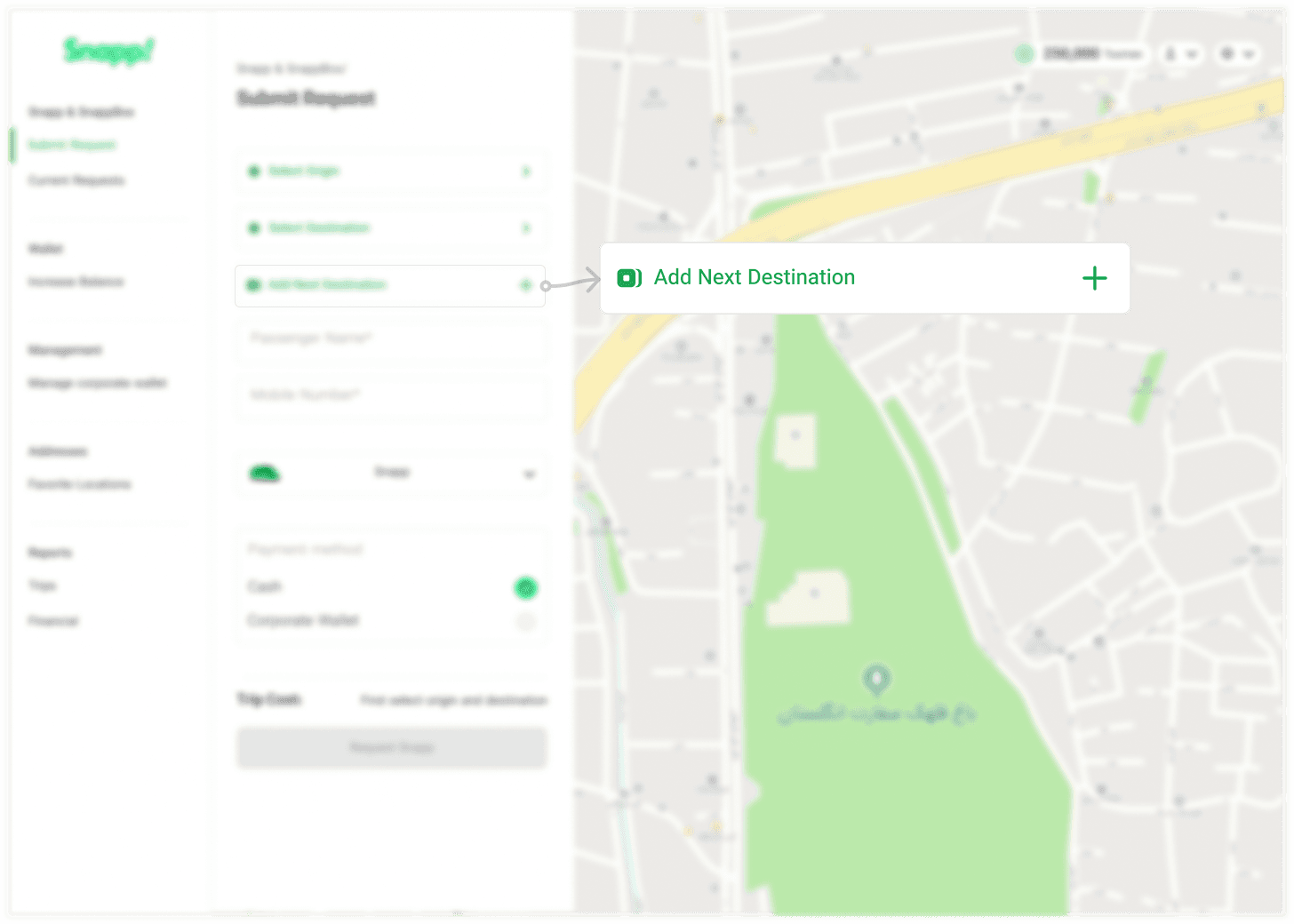
figure 6:
New design with add second destination btn.